listening, drawn live

Graphic Facilitation

Live drawing at events and workshops, and illustrated summaries and infographics for research and public engagement projects.

What I offer

Live graphic facilitation

Drawing a conversation as it happens at workshops, panels, consultations and conferences.

Co-created infographics

Working with participants, patients and families to turn their experience and research findings into clear, friendly visuals.

Visual workshops

Helping groups think, plan and reflect together through drawing.

Selected projects

Infographics · co-created with families

Living with DDH: visual resources for families

Two infographics co-created with caregivers of children with developmental dysplasia of the hip (DDH), bringing together what parents wish they had known and their practical advice for families after a diagnosis.

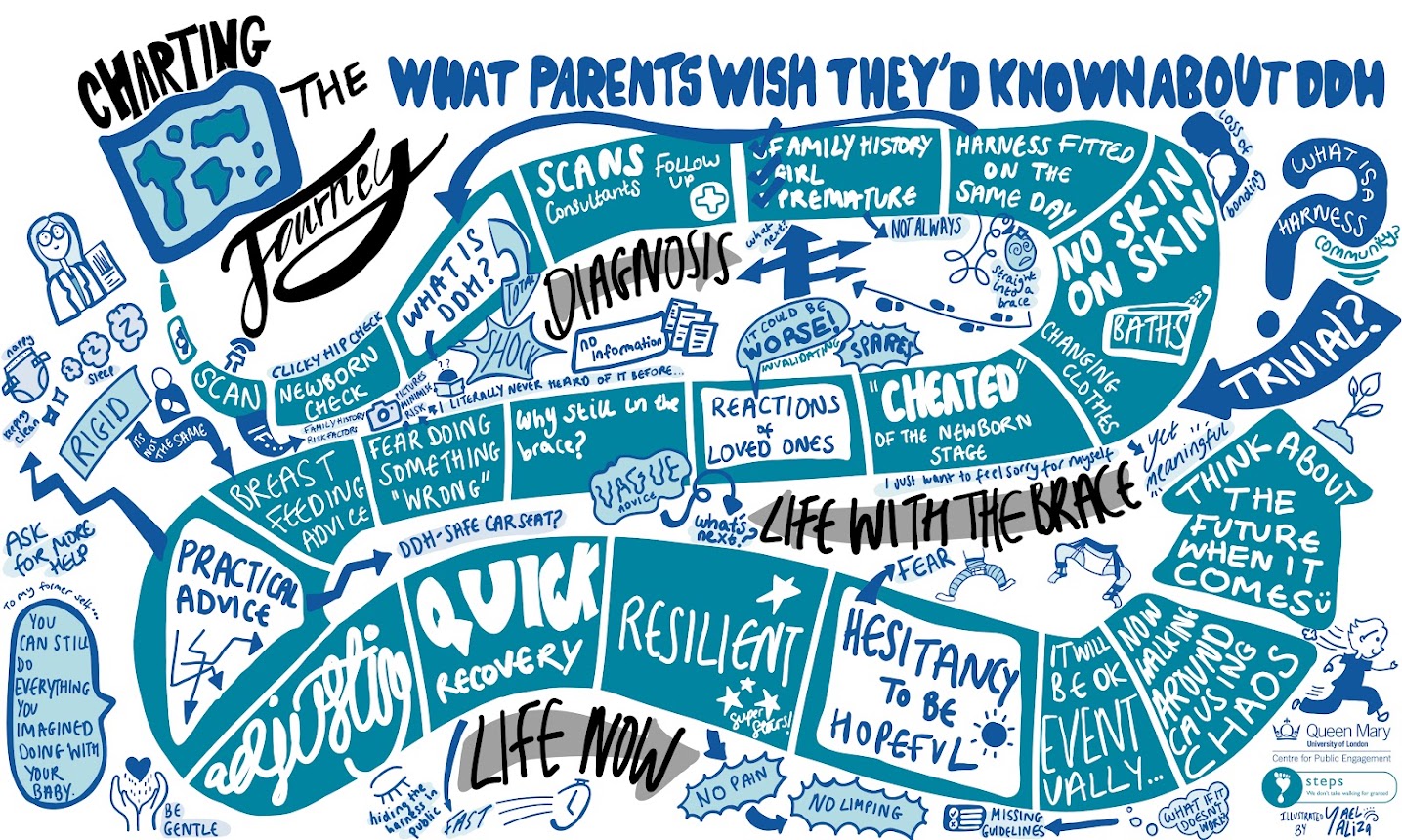
Charting the Journey follows families along a winding road, from newborn checks and diagnosis, through life with the brace, to life now. What now? gathers parents’ own tips and tricks, where to find support, the special moments along the way, how the screening process works and the impact on parents.
  • Partners: Steps Charity; Queen Mary University of London Centre for Public Engagement
  • Project lead: Dr Jessica Rees
  • My role: Graphic facilitator and illustrator
Infographic “Charting the Journey: what parents wish they’d known about DDH”, drawn as a winding road through diagnosis, life with the brace and life now.

Charting the Journey

What parents wish they’d known about DDH · Steps Charity
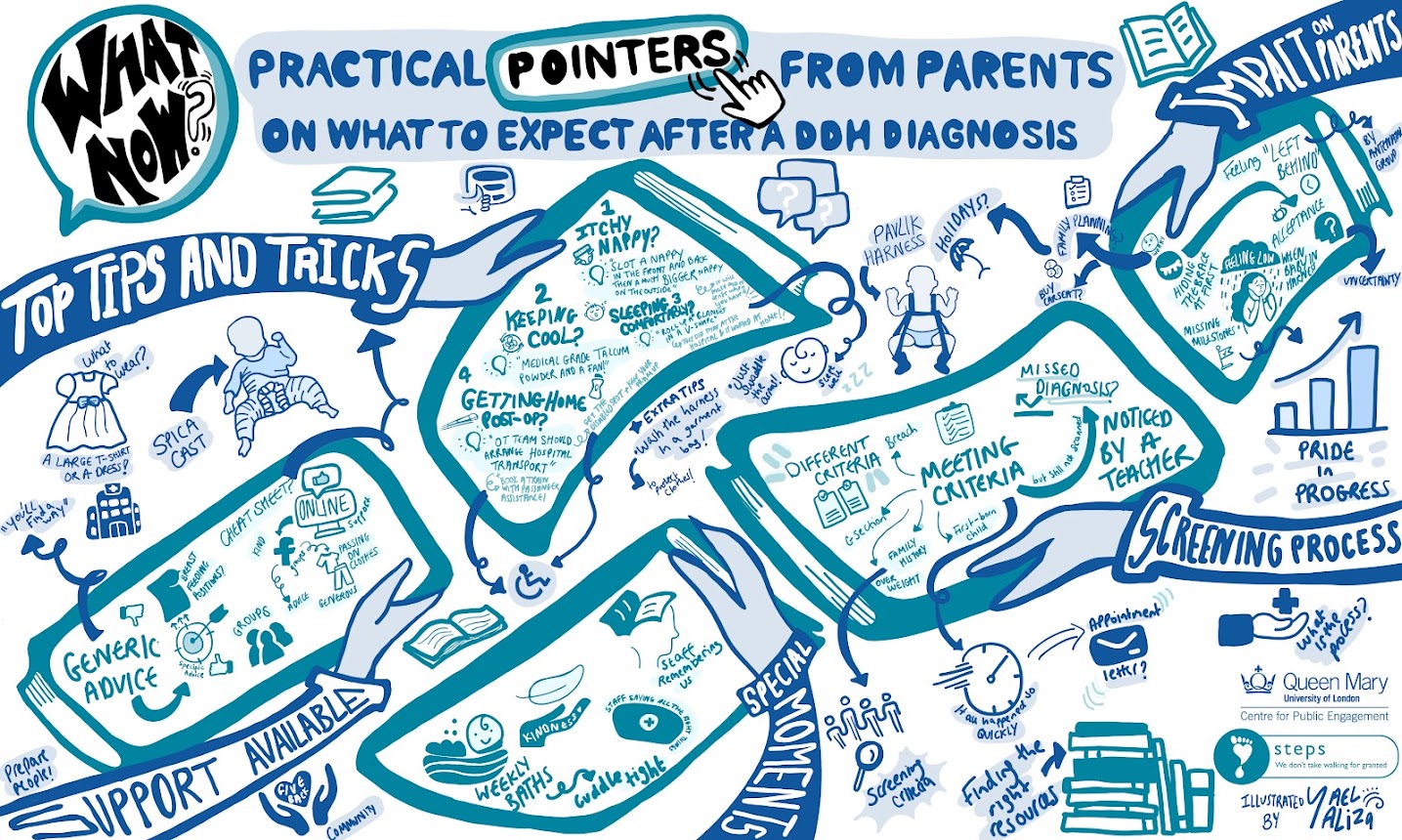
Infographic “What now? Practical pointers from parents on what to expect after a DDH diagnosis”, covering top tips and tricks, support available, special moments, the screening process and the impact on parents.

What now?

Practical pointers from parents after a DDH diagnosis · Steps Charity
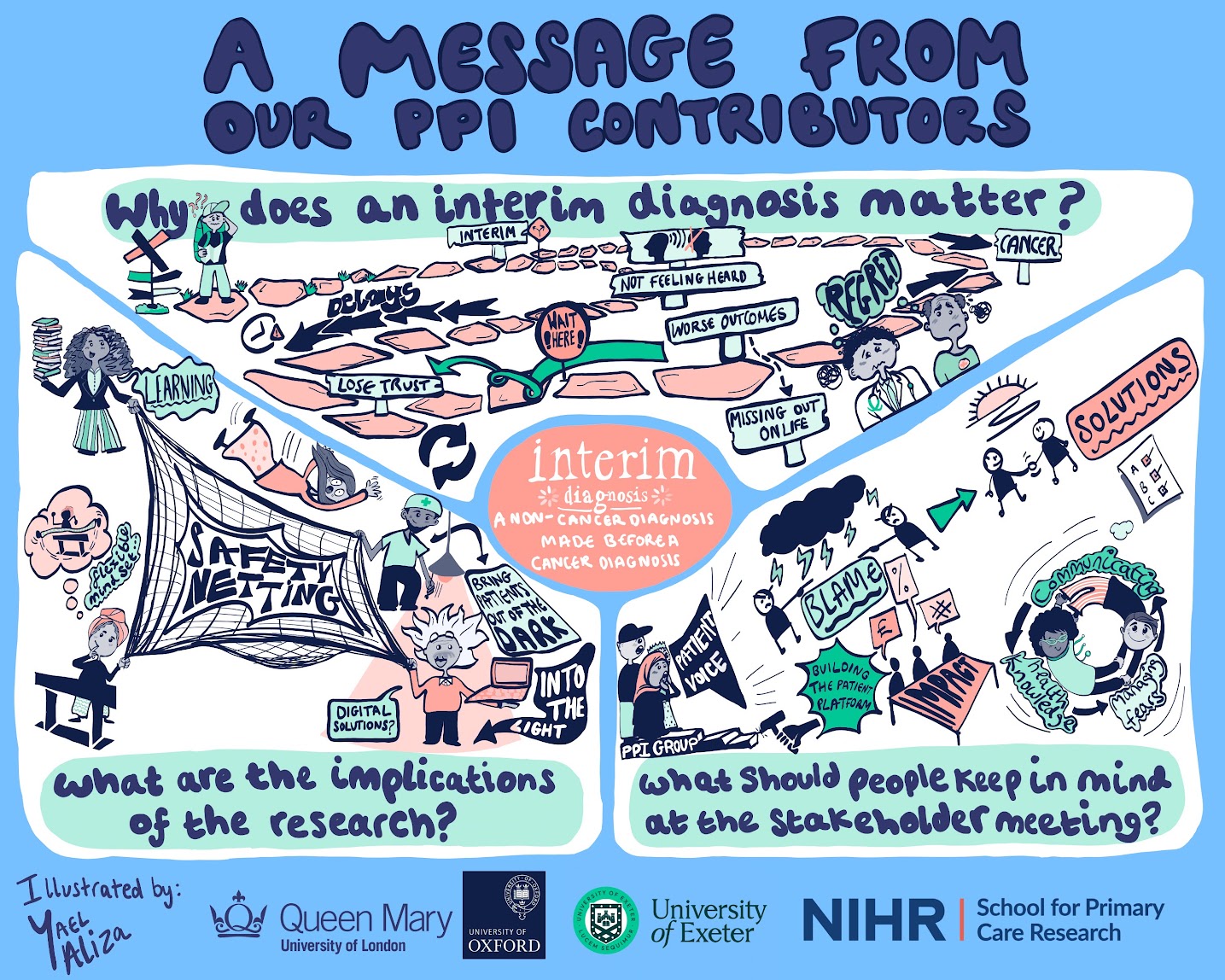
Illustration and video · co-created with a PPI group

A message from our PPI contributors

How can we carry out research with the public, rather than for them? That question sits at the heart of the MODE study, which looks at when non-cancer diagnoses made before a cancer diagnosis are missed opportunities to diagnose cancer sooner.

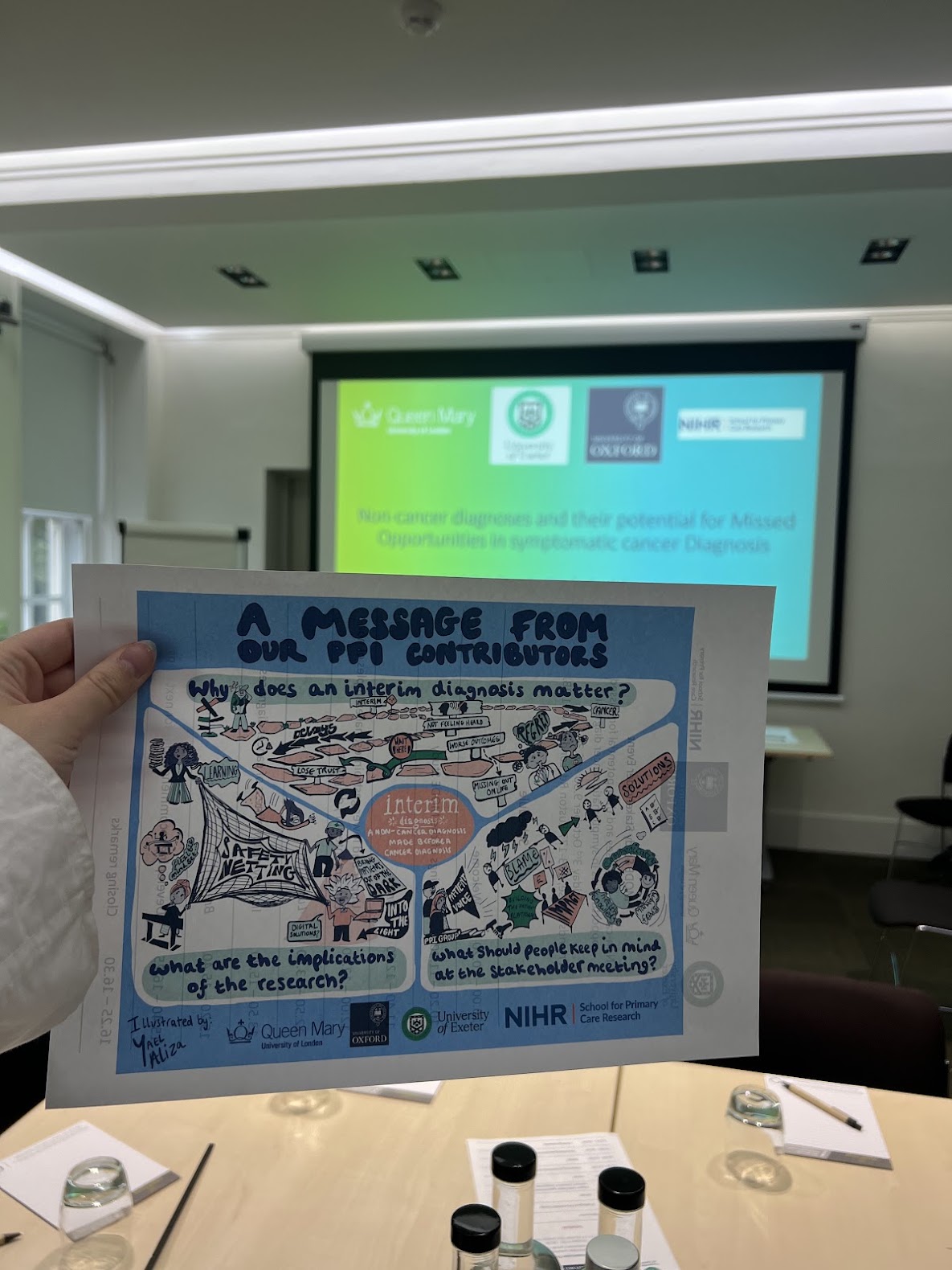
During my NIHR internship with the MODE study team, I worked with the study’s Patient and Public Involvement (PPI) group to visually communicate their lived experiences and perspectives: why an interim diagnosis matters, what the research means for practice, and their key messages for the people acting on it.

Together we created an illustration and a short video, shared at a stakeholder event where clinicians, patients, charities and policymakers worked to identify targets for future interventions. They helped keep the discussion rooted in lived experience.

  • Partners: MODE study team and PPI group; NIHR School for Primary Care Research; Queen Mary University of London; University of Oxford; University of Exeter
  • Supervisor: Mel Ramasawmy · Team lead: Georgia Black
  • My role: NIHR intern, graphic facilitator and illustrator
Illustration titled “A message from our PPI contributors”, asking why an interim diagnosis matters, what the implications of the research are, and what people should keep in mind at the stakeholder meeting.
The printed illustration “A message from our PPI contributors” held up at the stakeholder meeting, with the Queen Mary, Exeter, Oxford and NIHR title slide on the screen behind

In use at the stakeholder meeting